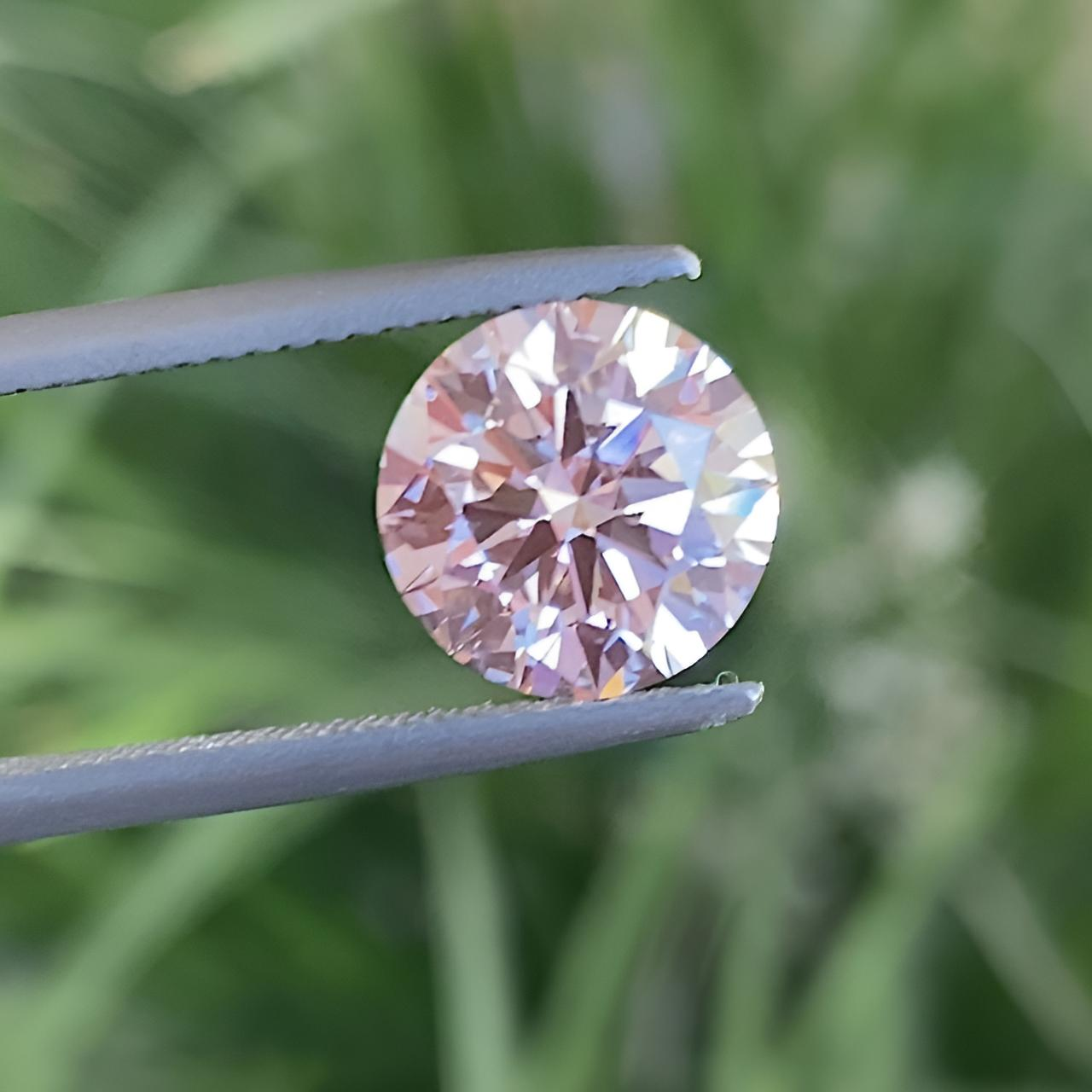


Diamonds fluorescent are one of those intriguing topics that make you say, “Wait, diamonds can glow?” Yes, you heard it right! But not all diamonds have this fascinating quality. Imagine you’re in a dark room, and suddenly, a diamond emits a soft, ethereal glow—sounds like magic, doesn’t it? So what causes this mysterious luminescence? Fluorescence in diamonds is often misunderstood, yet it adds an extra dimension to these precious stones.
So, why should you care about diamonds fluorescent? For collectors and enthusiasts alike, it adds another layer of uniqueness to a diamond. Some find it enchanting; others, not so much. But one thing’s for sure: diamonds that exhibit fluorescence offer a world of beauty that goes beyond the standard sparkle we all know and love.
The Science Behind Diamonds Fluorescent
Let’s dive into the mechanics of what makes diamonds fluorescent. This phenomenon occurs when a diamond is exposed to ultraviolet (UV) light, causing it to emit a soft glow. Typically, this glow is blue, but sometimes you might find diamonds that fluoresce in other colors like yellow or even green. But why does this happen?
Fluorescence is due to the presence of certain trace elements within the diamond, which, when exposed to UV light, emit light at a different wavelength. So next time you’re in a nightclub with UV lights, don’t be surprised if your diamond suddenly shows its true colors! But does this affect the value of the diamond?
Interestingly, the GIA (Gemological Institute of America) grades diamond fluorescence from “None” to “Very Strong.” Some believe that strong fluorescence can make a diamond look hazy or milky, while others argue it enhances the diamond’s appearance, especially in lower color grades. The truth is, most people don’t even notice fluorescence with the naked eye.
Does Fluorescence Affect Diamond Value?
Ah, the million-dollar question! Does it really impact the cost? While you might think that any unique feature in a diamond would drive up its price, the impact of fluorescence on value is a little more nuanced. In some circles, diamonds with very strong fluorescence might be priced lower because of perceived visual imperfections. Yet, in other cases, especially for diamonds in the lower color grades, a hint of fluorescence can make the gem look whiter and more appealing.
At Talore Diamonds, we believe that every diamond is unique, and fluorescence is just another characteristic to consider when making a purchase. Just imagine owning a Natural Loose 1.03ct Pear Fancy Vivid Yellow-Orange I1 Diamond GIA Certified for ₪16900—fluorescent or not, it’s a piece of art!
The Subjectivity of Beauty
Beauty, as they say, is in the eye of the beholder. And this couldn’t be truer when it comes to diamonds fluorescent. Some collectors actively seek out strong fluorescence for its unique appeal, while others prefer none at all. To each their own! But let’s not forget the other stunners like the Natural Loose 1.16ct Pear Fancy Vivid Yellow-Orange Diamond GIA Certified, priced at $16800, which, even without notable fluorescence, captivates with its vibrant hue.
Exploring the World of Unique Diamonds
For those curious souls who wish to learn more about these fascinating gems, let’s not ignore other unique diamonds. While fluorescence adds a mystical charm, colors bring a whole new dimension. Have you ever wondered why green diamonds or Argyle diamonds are so sought after? Each diamond tells a story, just waiting for a new owner to continue its legacy.
Take the Natural Loose 0.32ct Round PC1 SI1 Diamond Pink Diamond From ARGYLE Australia, priced at ₪8900, for example. With its origin at the famous Argyle mine, this diamond offers not just beauty but a piece of history. If you’re interested in pink diamonds, don’t miss our guide to rare luxury pink diamonds.
How to Choose the Right Fluorescent Diamond
Now, let’s chat about picking out a diamond with fluorescence. The key? Knowing what you value. Do you find the glow charming or distracting? Consider the lighting conditions in which you’ll be wearing the diamond most—indoors or out in the sunlight. Don’t be shy to ask questions and view the diamond under different lighting conditions.
At Talore Diamonds, our experts suggest examining the diamond in both UV and natural light to see how fluorescence affects its appearance. Feel free to consult with us when looking at diamonds like the Natural Loose 0.25ct Pear Fancy Vivid Yellow-Orange VS2 Diamond GIA Certified for $3400. Remember, it’s all about finding your perfect match.
Frequently Asked Questions
What causes diamond fluorescence?
Fluorescence occurs when trace elements in the diamond emit light under UV exposure, typically appearing as a blue glow.
Does fluorescence impact diamond value?
Fluorescence can impact value based on market demand and perception, but its effect varies with each diamond.
Is diamond fluorescence visible in all lighting conditions?
Fluorescence is most noticeable under UV light, like in clubs or special lighting, but generally not visible in regular lighting.
Do all diamonds have fluorescence?
No, only a portion of diamonds exhibit fluorescence, with GIA grading them from “None” to “Very Strong.”
Does fluorescence affect the color appearance of diamonds?
In some cases, fluorescence can enhance the color of lower-graded diamonds, making them appear whiter.
Embrace the Glow with Talore Diamonds
In the grand theater of diamonds, fluorescence is a subplot that captivates and intrigues. Whether you’re a seasoned diamond enthusiast or a curious newcomer, understanding this feature adds depth to your appreciation of these precious stones. At Talore Diamonds, we’re here to guide you through every facet of your diamond journey. Visit Talore Diamonds today to explore our exquisite collection and find the diamond that resonates with you.