The Remarkable Rise of Pink Diamond Prices
Few gemstones have captured the imagination of collectors and investors like pink diamonds. Once considered a niche luxury, these rare stones have seen dramatic price increases over the past few decades. Driven by scarcity, growing global demand, and the closure of the world’s primary source, pink diamonds have transformed from beautiful curiosities into some of the most valuable gems on earth.
What Makes Pink Diamonds So Rare?
Unlike white diamonds, whose value is largely determined by clarity and cut, pink diamonds owe their worth primarily to their extraordinary rarity and unique color. Scientists believe their pink hue results from intense pressure during formation that distorts the crystal lattice structure, altering the way light passes through the stone.
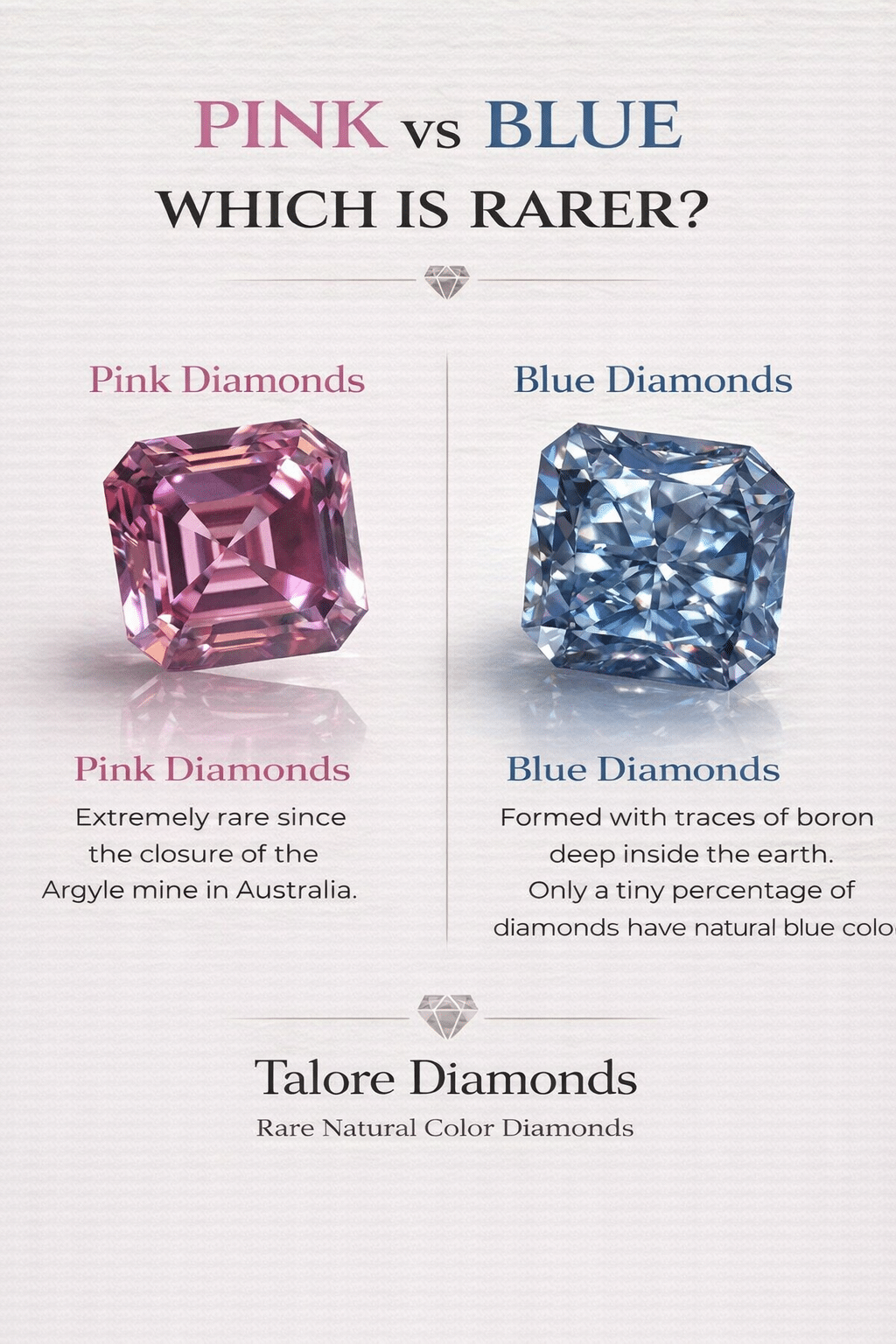
For many years, the majority of the world’s supply came from the Argyle Mine in Western Australia. At its peak, the mine produced more than 90% of the global supply of pink diamonds. Even then, pink stones represented only a tiny fraction of the mine’s overall diamond output.
Because supply was already extremely limited, any changes in production or availability had an outsized impact on prices.
Price Trends Over the Decades
1980s–1990s: Emerging Luxury
During the 1980s and early 1990s, pink diamonds were admired but not yet widely recognized as an investment asset. Prices were relatively modest compared to today, although high-quality stones still commanded premiums over colorless diamonds.
Marketing efforts by Argyle during the 1990s helped bring global attention to pink diamonds. The mine began hosting exclusive annual tenders for its best stones, introducing them to elite collectors and jewelers.
As awareness grew, prices began climbing steadily.
2000s: Growing Collector Demand
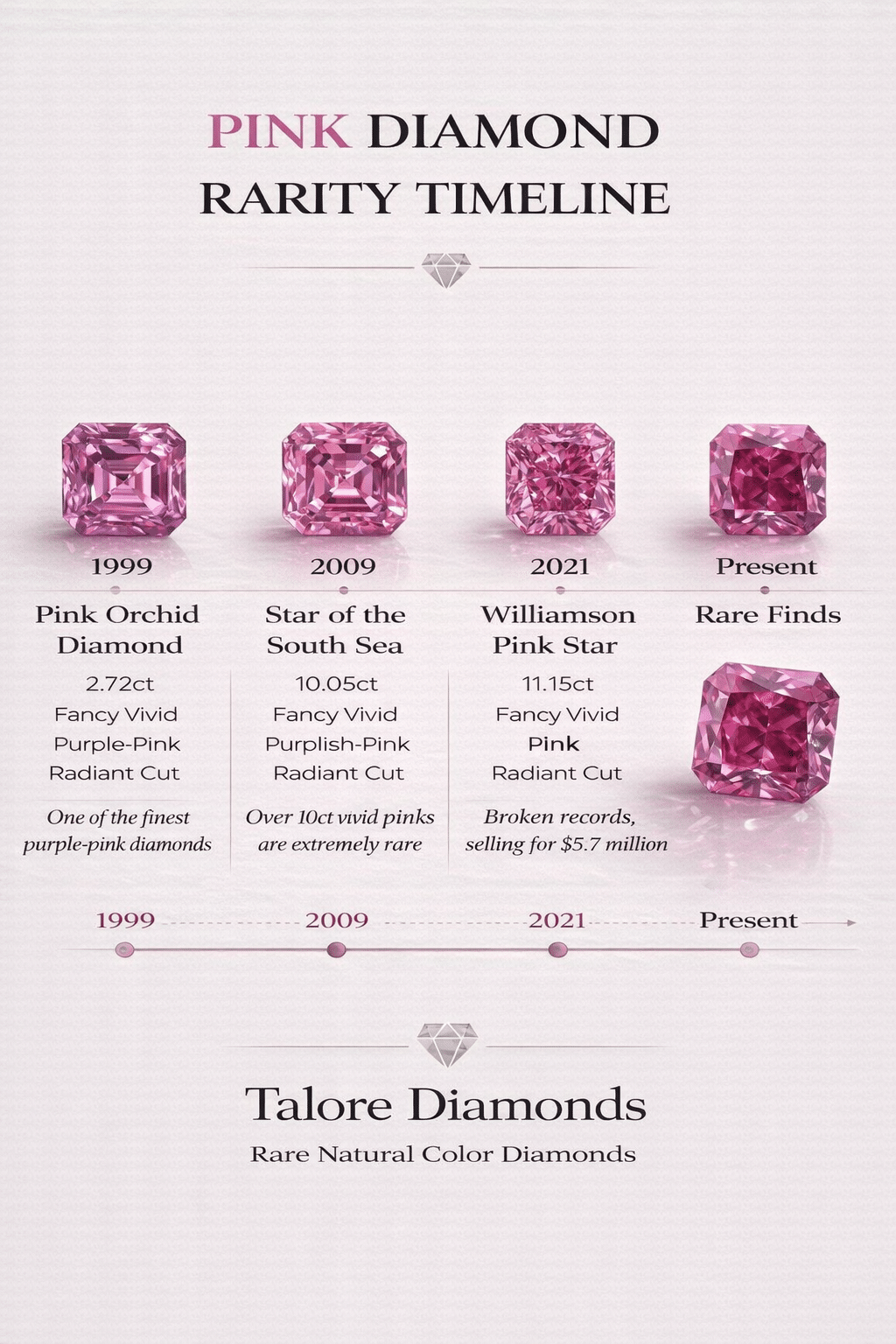
By the early 2000s, wealthy collectors and investors started viewing colored diamonds—especially pink ones—as alternative assets. Auction houses began reporting record-breaking sales for rare stones.
During this period:
Prices for high-quality pink diamonds rose significantly.
Auction records were set almost every few years.
Demand expanded in markets like Asia and the Middle East.
Investors realized that the supply of natural pink diamonds was extremely finite.
2010s: Rapid Appreciation
The 2010s marked one of the most dramatic periods of price growth. Industry indices tracking pink diamonds reported average price increases of more than 300–500% over roughly two decades.
Several factors contributed:
Increasing global wealth among collectors
Greater recognition of colored diamonds as investment-grade assets
Intensifying scarcity of new stones entering the market
As the decade progressed, another major factor emerged: the looming closure of the Argyle Mine.
2020 and Beyond: Supply Shock
In 2020, the Argyle Mine officially closed after nearly four decades of operation. With the primary global source gone, the supply pipeline for new pink diamonds effectively shrank overnight.
The closure triggered:
Immediate price increases in the secondary market
Rising demand from investors anticipating long-term scarcity
Greater competition at auctions and private sales
Since then, high-quality pink diamonds—especially stones with strong color saturation—have continued to command record-breaking prices.
Why Investors Pay So Much
Pink diamonds combine several characteristics that drive their value:
Extreme rarity – Natural pink diamonds represent a tiny percentage of global diamond production.
Finite supply – With the Argyle Mine closed, few new stones are expected to enter the market.
Strong collector demand – High-net-worth buyers compete for the best stones.
Portable wealth – A single gemstone can hold millions of dollars in value.
Because of these factors, pink diamonds have often outperformed many traditional luxury collectibles.
The Future of Pink Diamond Prices
While no asset is guaranteed to rise indefinitely, most experts agree that the fundamentals supporting pink diamond prices remain strong. The combination of permanent scarcity and global demand continues to drive the market.
For collectors, pink diamonds are more than just gemstones—they are pieces of geological history, each formed billions of years ago under extraordinary conditions.
As supply dwindles and appreciation for rare colored diamonds grows, pink diamonds will likely remain among the most coveted and valuable gems in the world.
Read more from our pink diamonds guide.