

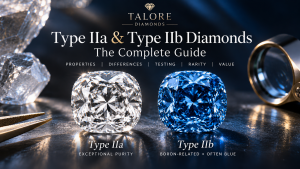
Diamond type describes how nitrogen and boron impurities are incorporated into a diamond’s crystal structure. It is a gemological classification, not a quality grade, color grade, or guarantee of value.
What is Type IIa?
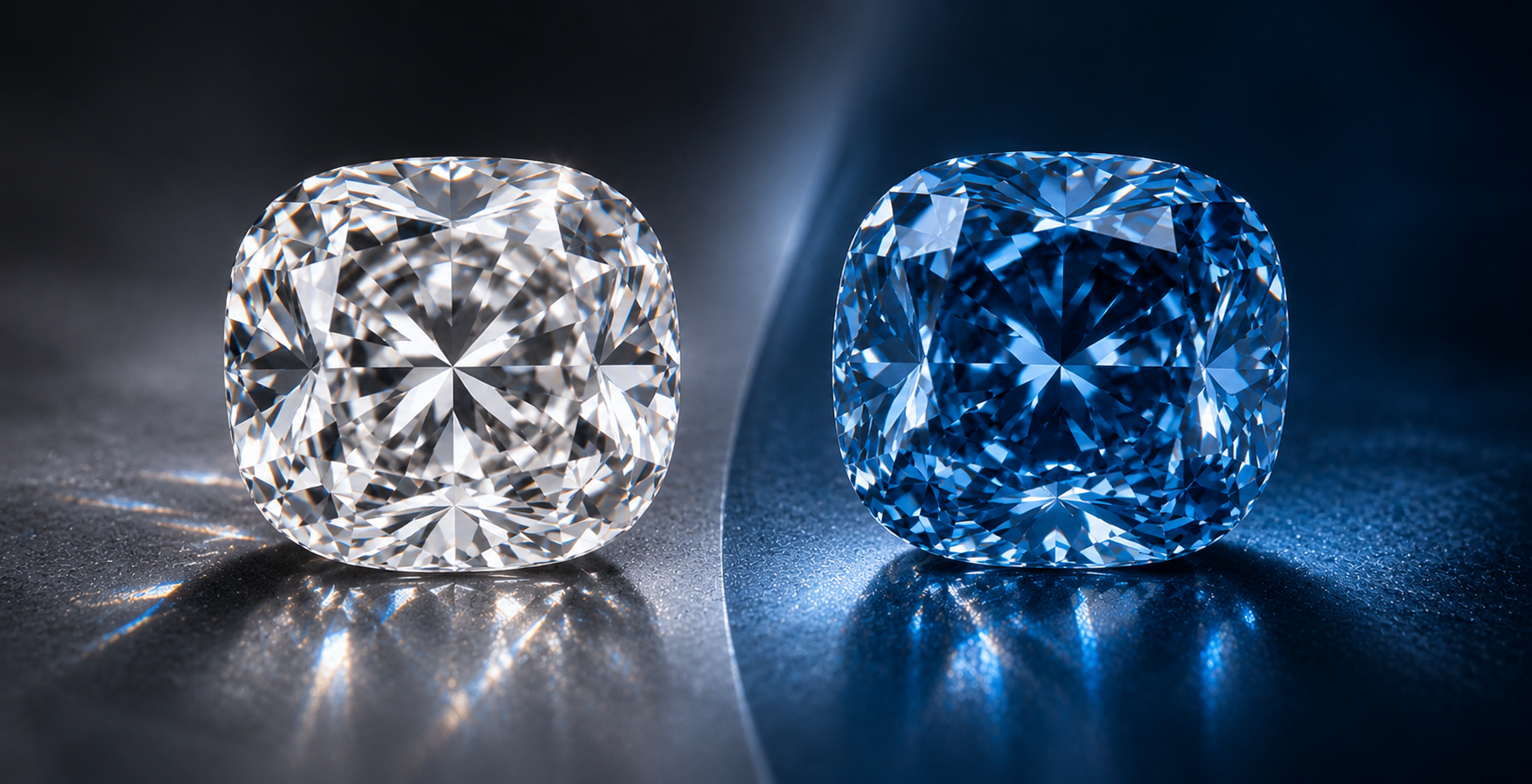
Type IIa diamonds show no measurable nitrogen-related absorption in the infrared spectrum under standard gemological classification. They may be colorless, brown, pink, or other colors. Their appearance alone cannot establish their type.
What is Type IIb?
Type IIb diamonds contain boron-related features and may conduct electricity. Many natural blue diamonds belong to this type, but not all blue diamonds are Type IIb, and not every Type IIb diamond appears blue.
How are diamond types verified?
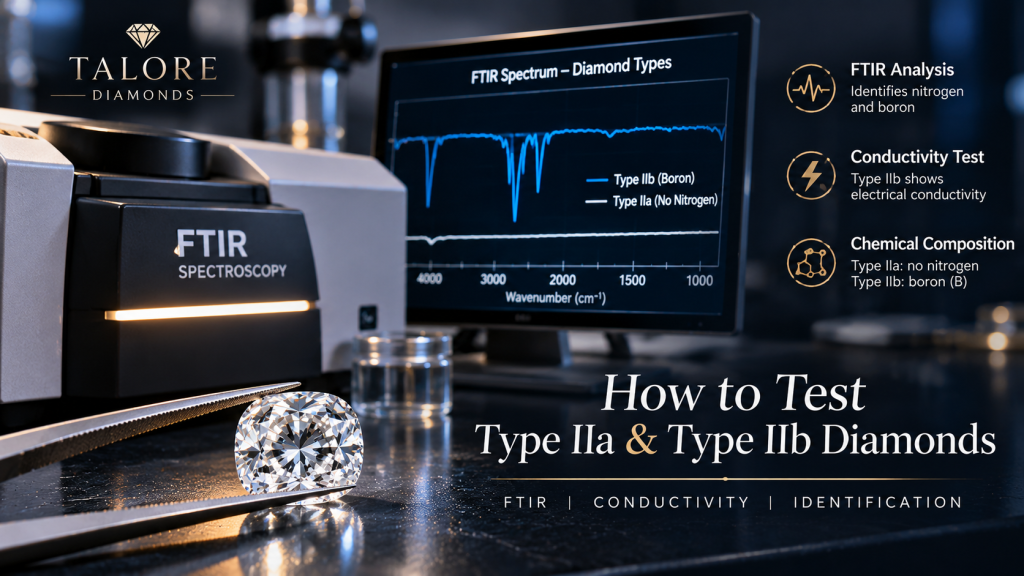
Professional laboratories use infrared spectroscopy, often alongside additional tests. Electrical conductivity can be a useful clue for Type IIb but is not conclusive on its own. Ask for documentation that explicitly supports the claimed type.
Explore the guides
- What Is a Type IIa Diamond?
- Type IIb Diamonds: Boron, Blue Color and Conductivity
- Type IIa vs Type IIb: Key Differences
- How to Test Diamond Type: FTIR and Conductivity
For natural fancy-color diamonds, explore blue diamonds and the educational blue diamond guide. Product availability and diamond-type documentation must be confirmed individually.
Explore verified diamond collections: Shop Type IIa Diamonds | Shop Type IIb Diamonds. Diamond-type claims should be supported by appropriate laboratory documentation.